Jonah -The Story of Suffering and Redemption

Jonah 1:1-17

Now the word of the Lord came to Jonah the son of Amittai, saying, 2 “Arise, go to Nineveh, that great city, and call out against it, for their evil has come up before me.” 3 But Jonah rose to flee to Tarshish from the presence of the Lord. He went down to Joppa and found a ship going to Tarshish. So he paid the fare and went down into it, to go with them to Tarshish, away from the presence of the Lord.

4 But the Lord hurled a great wind upon the sea, and there was a mighty tempest on the sea, so that the ship threatened to break up. 5 Then the mariners were afraid, and each cried out to his god. And they hurled the cargo that was in the ship into the sea to lighten it for them. But Jonah had gone down into the inner part of the ship and had lain down and was fast asleep. 6 So the captain came and said to him, “What do you mean, you sleeper? Arise, call out to your god! Perhaps the god will give a thought to us, that we may not perish.”

7 And they said to one another, “Come, let us cast lots, that we may know on whose account this evil has come upon us.” So they cast lots, and the lot fell on Jonah. 8 Then they said to him, “Tell us on whose account this evil has come upon us. What is your occupation? And where do you come from? What is your country? And of what people are you?” 9 And he said to them, “I am a Hebrew, and I fear the Lord, the God of heaven, who made the sea and the dry land.” 10 Then the men were exceedingly afraid and said to him, “What is this that you have done!” For the men knew that he was fleeing from the presence of the Lord, because he had told them.

11 Then they said to him, “What shall we do to you, that the sea may quiet down for us?” For the sea grew more and more tempestuous. 12 He said to them, “Pick me up and hurl me into the sea; then the sea will quiet down for you, for I know it is because of me that this great tempest has come upon you.” 13 Nevertheless, the men rowed hard to get back to dry land, but they could not, for the sea grew more and more tempestuous against them. 14 Therefore they called out to the Lord, “O Lord, let us not perish for this man’s life, and lay not on us innocent blood, for you, O Lord, have done as it pleased you.” 15 So they picked up Jonah and hurled him into the sea, and the sea ceased from its raging. 16 Then the men feared the Lord exceedingly, and they offered a sacrifice to the Lord and made vows.

17  And the Lord appointed a great fish to swallow up Jonah. And Jonah was in the belly of the fish three days and three nights.

The book of Jonah has a several themes, God’s sovereignty, the mercy of God, and God’s salvation. This is not an exhaustive look at the book but more of a topical look at the themes and the applications that are found throughout the book. But where is the gospel found here in Jonah? You can see the gospel constantly repeated throughout the book, the mercy of God towards sinners and the sovereign way that God brings all things together despite how Jonah runs away from God and how we also run from God.

Running from God is something I think we are all experienced in, whether we chose to not follow Him because we think our way is better, or as Jonah does running in the opposite direction.

Most of us are aware of the Biblical story of Jonah, if we have any recollection of our young Sunday School days then we know the part of the story with the great fish. It is not specified as a whale, but as a great fish and those who don’t take the Bible seriously have denied that this could have happened. How could someone live inside a great fish for three days? This question is constantly brought up by those who deny Scripture, but as Christians we are aware that God is sovereign and can do what He wants when he wants. Conversely those who deny Jonah also deny Jesus. The better Jonah is proclaimed by Christ: Matthew 12:40-41

40 For just as Jonah was three days and three nights in the belly of the great fish, so will the Son of Man be three days and three nights in the heart of the earth. 41 The men of Nineveh will rise up at the judgment with this generation and condemn it, for they repented at the preaching of Jonah, and behold, something greater than Jonah is here.

The book of Jonah speaks of Jesus who is the proof of his power to save his people and raise them from the dead. Jonah’s mission was prophecy. It pointed to Christ who gave himself to death for sinners and who rose on the third day to be the Saviour of all who trust in him for salvation, repenting of their sins.

As E. J. Young has put it, ‘It is rather to show that Jonah being cast into the depths of Sheol and yet brought up alive is an illustration of the death of the Messiah for sins not His own and of the Messiah’s resurrection.

We can see three different aspects of Jonah’s disobedience to God’s command to go to Nineveh.

The first three verses give us God’s desire for all people to be saved, even those who are evil, and wicked, God’s mercy and grace has no limitations.

Verses four through ten reveal to us God’s power over natural forces of the world to bring about his will and glory.

Verses eleven through seventeen show us how Jonah (and you and I) recognize God’s power to deliver us when we are finally done running from God.

Lets see God’s saving grace in our text this evening

“The word of the Lord came to Jonah…”

This is no ordinary proclamation, the King is speaking and Jonah must respond to Him, there is no alternative here. The word of God demands that Jonah get up from where he is and go. This is the plan and purpose of God to bring this man Jonah into participation into God’s plan for him and for the world. We are all participants in this purpose, God’s plan to send His Son into this world Jesus Christ, provides for us forgiveness as we fulfill his purposes and give Him glory.

Jonah rises as God commands but here is where things take a decisive turn. “Go to Nineveh, that great city and call out against it…”

What… Nineveh? We can hear Jonah’s mind thinking about this city, Jonah was a patriot of Israel and he knew all about Nineveh and how evil they were. Nineveh was the center of the Assyrian Empire and they were known to be the wicked of the wicked, none of the people were more evil. They took slaves, captured other people and did horrific things to them. They would cut off the left arm of a person and the left leg, but not the right arm or leg so they could shake their hand as they watch them die.

This commandment could not be right, we could imagine Jonah thinking. How can I go to this evil place? Secondly, maybe Jonah was thinking they don’t deserve to be saved. This brings me to thinking about the people that we know who hate God and who continue to live in sin. Do they deserve the gospel? Do they need to hear the greatest good news in the world? We should answer yes, because we were once in the same position, but God in his mercy saved us. Think of Jonah’s argument here, could you imagine being a Jew in New York in 1938 and being asked to travel to Berlin Germany and proclaim God’s mercy to the Nazis? Jonah decides he knows better, he finds a ship going in the opposite direction than the five hundred miles to Nineveh, he finds a ship going west to a place called Tarshish some thousands of miles away.

The Lord knows all things and Jonah should have understood this, as he was familiar with the Psalms.

Psalm 139 To the choirmaster. A Psalm of David.

1 O Lord, you have searched me and known me!

2 You know when I sit down and when I rise up;

you discern my thoughts from afar.

3 You search out my path and my lying down

and are acquainted with all my ways.

4 Even before a word is on my tongue,

behold, O Lord, you know it altogether.

5 You hem me in, behind and before,

and lay your hand upon me.

6 Such knowledge is too wonderful for me;

it is high; I cannot attain it.

7 Where shall I go from your Spirit?

Or where shall I flee from your presence?

We can’t run from the Lord we will just get tired of running, and because of the love Christ has for us we will be disciplined because as with Jonah, God will bring us back.

Lets see God’s power over the Natural world to bring about his glory

4 But the Lord hurled a great wind upon the sea, and there was a mighty tempest on the sea, so that the ship threatened to break up. 5 Then the mariners were afraid, and each cried out to his god.

Nothing like a storm on the sea to change your mind. The storm’s significance extends beyond Jonah alone. The text shows the extent of God’s power and demonstrates through the mission to Nineveh, that God’s redemptive activity is not limited to a special chosen group. The storm is so great that it terrifies veteran sailors and threatens the ship. Even the pagans are searching for a way out of this. The command of God to go to Nineveh demonstrates the command of Christ in Matthew 28:19

19 Go therefore and make disciples of all nations, baptizing them in the name of the Father and of the Son and of the Holy Spirit, 20 teaching them to observe all that I have commanded you. And behold, I am with you always, to the end of the age.”

Jonah 9-10

9 And he said to them, “I am a Hebrew, and I fear the Lord, the God of heaven, who made the sea and the dry land.” 10 Then the men were exceedingly afraid and said to him, “What is this that you have done!” For the men knew that he was fleeing from the presence of the Lord, because he had told them.

How ironic is this, that Jonah refused to go to Nineveh to preach to the pagans, but here he is preaching to the pagan sailors!

The stark realization of disobeying the Lord has come upon Jonah, he has been sleeping through all of this chaos, it reminds us of Jesus sleeping in the boat on the Sea of Galilee as a storm engulfs the disciples. Jesus rises to the sounds of the men afraid they will be drowned and calms the sea.

Matthew 8:27

27 And the men marveled, saying, “What sort of man is this, that even winds and sea obey him?”

Look at our text in verse 10, the men, the pagans ,also realize the power of God, they KNEW Jonah was running away from the Lord. Here there is an acknowledgement of who God is, brought about by God alone through His power and glory. Have you ever been in a place where you have seen God’s providence displayed so perfectly? A place where coincidence is not the answer, but the answer resides with God’s amazing grace for us and His unbelievable love. Jonah sees it, the mariners see it and there’s only one place to run to. Running to God.

God’s Power and glory

Jonah 12-13

12 He said to them, “Pick me up and hurl me into the sea; then the sea will quiet down for you, for I know it is because of me that this great tempest has come upon you.” 13 Nevertheless, the men rowed hard to get back to dry land, but they could not, for the sea grew more and more tempestuous against them.

Jonah still is resisting God here, to the point of sacrificing himself rather than obeying God. This stubbornness should remind us of how we were before we came to Christ. Jonah could have repented and went back to Joppa. Sin can drive us to places where we have never been before, deep dark places such as the sea is illustrated here.

Even though all of this storm the sailors were still not convinced, they still relied upon themselves and their own strength. “They rowed hard…” Trusting in our own abilities without relying upon Christ can give us a false security. We may run very fast in a race, but as we age our physical abilities will decline. We may be very intelligent but intelligence without Christ is hopeless. Eternal life demands Christ, without it we are lost.

Jonah 14

14 Therefore they called out to the Lord, “O Lord, let us not perish for this man’s life, and lay not on us innocent blood, for you, O Lord, have done as it pleased you.”

“THEY called out to the Lord” The sailors knew they were in a hopeless situation and the Lord had brought them to this moment. It was a moment of blinding truth where nothing else mattered, not the storm, only their lives and being tossed into the raging sea. They could not do anything to stop this storm, Jonah could only do one thing in the midst of disobedience, there needed to be something drastic to come back before God.

James Boice helps us here:

“It is not the fault of the sailors here, it is the fault of the Christian who had sailed with them, it is because of him that the situation is such that the knowledge and experience of the sailors can do no more.”

15 So they picked up Jonah and hurled him into the sea, and the sea ceased from its raging. 16 Then the men feared the Lord exceedingly, and they offered a sacrifice to the Lord and made vows.

17  And the Lord appointed a great fish to swallow up Jonah. And Jonah was in the belly of the fish three days and three nights.

This is third time the sailors have feared something, in verse 5, it was the storm, in verse 10 it was that Jonah was a Hebrew, and the third here in verse 16. Real conversion happens here, not a foxhole conversion in the face of death. The sailors worship the Lord after and make vows before him. The sovereign grace and power of the Lord is not just centered on Jonah, but God elects here the sailors. God chooses to save and He blesses whom he will bless. This is the amazing power that we see here in the story of Jonah, that sinners deep in their sin and unbelief can be saved through God’s love and desire for them to come to him.

17  And the Lord appointed a great fish to swallow up Jonah. And Jonah was in the belly of the fish three days and three nights.

Don’t get wrapped up on what was going on inside this great fish, there is something else going on here. Jonah has been swept to the depths of the sea and only God can save him, there is a redemptive narrative here. In the darkest moments of Jonah’s life he felt abandoned, left to himself, but God saved him through something only God could do. In the darkest moments of Jesus’ earthly life the cross provides the saving grace for all of us, God never abandoned Jesus, as he never abandoned Jonah. When we feel abandoned by God we need to see through the fog of the swirling sea and the pain of this world and know we are loved and have been chosen to live eternally.

God brings whom he will bring to faith, our job is preach the gospel which saves. The amazing great news that Jesus, the better Jonah, the sinless one has given to us. God saves Jonah through a great fish and Jesus has saved us through the Cross even in the midst of our disobedience. 1 Cor 6:11

11 And such were some of you. But you were washed, you were sanctified, you were justified in the name of the Lord Jesus Christ and by the Spirit of our God.

We have been washed, as Jonah was washed, sanctified and set apart for the work of God, justified through Jesus Christ to have life in His name. Running from God is not an option, cling to him in the darkest moments.


No Doubting King Jesus

Faith Presbyterian Church

Lord’s Day February 15,2026

No Doubting King Jesus

Matthew 11:1-6

When Jesus had finished instructing his twelve disciples, he went on from there to teach and preach in their cities.

2 Now when John heard in prison about the deeds of the Christ, he sent word by his disciples 3 and said to him, “Are you the one who is to come, or shall we look for another?” 4 And Jesus answered them, “Go and tell John what you hear and see: 5 the blind receive their sight and the lame walk, lepers are cleansed and the deaf hear, and the dead are raised up, and the poor have good news preached to them. 6 And blessed is the one who is not offended by me.”

Introduction:

In our text this morning we have Jesus continuing his preaching and teaching, previously he has sent out his 12 apostles with full authority to heal and cast out demons, he has sent them out as sheep in the midst of wolves and He has detailed all the issues that will come with this authority. In the previous chapter Jesus tells His disciples that they will find their enemies in their own households. Coming into Chapter 11 we will see another enemy that comes to us as believers.

This morning we are beginning in Chapter 11 as Jesus prepares us for the human emotion of doubt.

Doubt is something that we all have experienced, whether it was momentary or lasting, we have gone through it. Doubt comes when we are challenged by the world or our circumstances. POW’s in the Vietnam War relate some of their experiences with doubt, many tell the story that their faith had taken a hit when they were captured by the North Vietnamese and tortured, they wondered whether God was really there, whether or not God really cared for them. In almost all of the accounts of POW’s in the Vietnam War there is a doubting, but then there is a clearer picture of who God is, how He is there in really bad situations. Captain Carlyle “Smitty” Harris tells the story of this same situation, of doubt and despair, upon being dumped into a North Vietnamese prison. He felt there was no hope until he remembered a code that was taught to him years before, a simple code he could teach to the other POW’s. Harris knew when men were taken to the painful interrogations and they became unendurable, when they returned to their cell he would tap out “God Bless You” understanding that hope was there, God was there and their doubts about their own survival would be eased.

Section 1

Two distinct principles are here for us this morning, first our battles with doubt and second, how we reject doubt through trusting the Word of God and the love of Jesus for us.

We are all susceptible to doubt, in His ministry Jesus is proclaiming the truth of God through the preaching and teaching of God’s Word.

Looking at our text this morning and verse one we can see the truth set forth through Christ, He is teaching and preaching, removing doubts and announcing the Kingdom of God.

1When Jesus had finished instructing his twelve disciples, he went on from there to teach and preach in their cities. It’s important to note that the teaching that Jesus does is instrumental in relieving the doubts about Himself and the gospel of salvation that He preaches. Previously Jesus instructed his disciples and others through announcing that the Kingdom of God was at hand and now as we go on to verse two, John the Baptist plays a pivotal role here in our two key thoughts for this message today. Doubt is our human condition, but rejecting doubt lies with knowing Jesus.

2 Now when John heard in prison about the deeds of the Christ, he sent word by his disciples 3 and said to him, “Are you the one who is to come, or shall we look for another?”

These verses have been looked at by many in our reformed circles in different ways, Calvin, Augustine and others see it this way:

that John wanted his disciples to have their own doubts dismissed through Jesus.

I have to disagree with these men, I know it may be shocking to disagree with them, but looking at Scripture and knowing the doubts we all have John is just like all of us. Without Jesus we can be lost in our doubts. John “heard about the deeds of the Christ” and it was his questioning “Are you the one who is to come, or shall we look for another?” that sent his disciples to ask of Jesus, to dispel his own doubts.

God had put Adam and Eve into a beautiful garden but doubt crept into that place,

Gen. 3 (Adam and Eve)

He said to the woman, “Did God actually say, ‘You shall not eat of any tree in the garden’?

1 Kings 19:9-10 (Elijah)

9 There he came to a cave and lodged in it. And behold, the word of the Lord came to him, and he said to him, “What are you doing here, Elijah?” 10 He said, “I have been very jealous for the Lord, the God of hosts. For the people of Israel have forsaken your covenant, thrown down your altars, and killed your prophets with the sword, and I, even I only, am left, and they seek my life, to take it away.”

Elijah had just killed the prophets of Baal and fought against every evil in Israel, but yet he is holed up in a cave bemoaning the circumstances he is in. He is in doubt, a great prophet of the Lord reduced to hiding in a cave. Anyone can have doubts. Doubters are in good company.

So we have many people in Scripture who doubted, Abraham, Moses, David and others, so why should John the Baptist be different?

There are three major reasons for understanding why John doubted. Physical reasons and Spiritual reasons.

1: He was in prison.

2: He was left emotionally drained

3: John had expectations for Jesus that were not being filled

Let’s look at number 1, being in prison. The place where John was, wasn’t anything like the prisons we know today. Many of these places were just holes in a floor where the prisoner was thrown into, or a barren room with no water or food.

According to Josephus, who writes about John in his Antiquities, Herod had imprisoned John in the fortress of Machaerus (modern Khirbet Mukawer), about five miles east of the Dead Sea, a particularly hot and desolate environment

When we see someone such as John, we see a man who prized his freedom, being separated from his disciples and people, this had to be particularly depressing for him. When we are separated from others and placed in a foreign environment our own doubts grow bigger and bigger in our thinking.

Doubt and despair are our company when we distant ourselves from others and neglect who we are in Christ. We make our own prisons and we become our own judges when we find ourselves in hard situations, we can pull away from the antidote for doubt, which is Jesus, and get deeper into our own doubt and despair. Sometimes our words can echo John’s, “Are you really the God who saves? Or should I look for another?” Charles Spurgeon comments on this text:

Dark thoughts may come to the bravest when pent up in a narrow cell. It was well that John’s question was put, that it might receive a distinct reply; re-assuring for himself, and instructive for us.

Dark thoughts strain our emotional health and emotions become front and center when they are raw and exposed.

Number two reason: John was emotionally drained

John had been calling out the Pharisees, the elders and King Herod. Every day was filled with accusations against the way that they had been living.

Daniel Doriani:

John languished in jail for months. Humans are more than thinking machines. We are physical, emotional, and spiritual beings. Prison wounds both the body and the emotions. It is human nature to have doubts when we suffer intensely.

When we are dealing with the pain of this world, whether it be family, relationships health or circumstances, there is a breaking point, a point in our lives that we are just exhausted from dealing with all of it. The exhaustion can drive us to doubt, but it is just a temporary situation where we are overwhelmed with it. Have you ever been in that place where all seems dark with no escape? I think we all have and we all have experienced the Baptist’s emotional despair.

It is in these times that we are looking for what we thought would happen, and are discouraged because what we wanted to occur has not come about.

3: John’s had expectations for Jesus that were not being filled:

Judgement plays a big role in how first century jews viewed the coming of the Messiah. There would be a “Ministry of Judgement” as James Montgomery Boice tells us in his commentary on Matthew. John’s own words reflect this in Matthew 3:12 as he speaks about Jesus baptizing with the Holy Spirit and fire:

12 His winnowing fork is in his hand, and he will clear his threshing floor and gather his wheat into the barn, but the chaff he will burn with unquenchable fire.”

John is sitting in prison because he rightly told Herod that he was going against God’s law. The entire culture had been taken over by godlessness with their abominations and sacrifices. Why has all the injustice not be cleansed?

D.A. Carson helps us here:

It was all right to heal the sick, raise the dead, cast out demons, still storms, preach righteousness, and announce the kingdom; but where was the judgment? Had the corruptions and cruelties of Caesar been abruptly shut down? Had the hypocritical temple leaders been banished? Had the disgusting corruptions of Herod Antipas been confronted? Why was he, John the Baptist, languishing in the stifling heat of the prison at Machaerus fortress for challenging the morals of Herod, while Jesus the alleged Messiah did nothing about this injustice?

2 D. A. Carson, God with Us: Themes from Matthew (Ventura, Calif.: Regal Books, 1985), 62.

So far in His ministry Jesus has only brought truth and grace, He has promised to free the captives as He reads the scroll of Isaiah: Luke 4:18-19

“The Spirit of the Lord is upon me,

because he has anointed me

to proclaim good news to the poor.

He has sent me to proclaim liberty to the captives

and recovering of sight to the blind,

to set at liberty those who are oppressed,

19 to proclaim the year of the Lord’s favor.”

Imagine John rotting in this prison seeing all the things Jesus is doing, but still not understanding the situation and most likely feeling as if he is forgotten. The Psalmist feels this way in Psalm 42:9-10

9 I say to God, my rock:

“Why have you forgotten me?

Why do I go mourning

because of the oppression of the enemy?”

10 As with a deadly wound in my bones,

my adversaries taunt me,

while they say to me all the day long,

“Where is your God?”

All is not lost for the Baptist, doubt is temporary (2x)but in the temporary we can forget the permanent, the eternal son of God Jesus Christ. How many times have we’ve seen what John is seeing? We see the world falling apart, loved ones experiencing pain from illness, relationships destroyed and generally we can be in despair.

We wonder where is God is all of this? Doubt is not an overriding aspect of the Christian life, it is temporary, fleeting and most of all it is healed by the words of Jesus that we will explore in the next set of verses.

Our healing of doubt in Christ.

Section 2(Our antidote to doubt)

4 And Jesus answered them, “Go and tell John what you hear and see: 5 the blind receive their sight and the lame walk, lepers are cleansed and the deaf hear, and the dead are raised up, and the poor have good news preached to them. 6 And blessed is the one who is not offended by me.”

I have to state this now for all of you, the Bible is an awesome supernatural Word. All through Scripture God puts the “problem” first for us to examine, then He gives us the “solution”. It’s no different here in Matthew’s gospel. “Go and tell John what you hear and see…” Jesus states that John needs to hear and see, use the physical abilities that God has given him to evaluate the situation that he is in. It’s not about John, it’s all about Jesus and what He is doing. The Kingdom of God is being proclaimed and the good news of the gospel is being preached. The good news of the gospel is what Jesus wants John to hear and see, that because of Christ there is new life, that because of Christ there is salvation for sinners, and because of Christ eternal life awaits us. Doubt is eliminated through the work and grace of Jesus, not because of what we do, its because of His obedience to willingly go to the Cross and fulfill the work of a Holy God. Jesus’ answer to John doesn’t just involve him hearing and seeing, it goes beyond that to John examining everything that Jesus has done and will do, specifically here in verses five and six.

5 the blind receive their sight and the lame walk, lepers are cleansed and the deaf hear, and the dead are raised up, and the poor have good news preached to them. 6 And blessed is the one who is not offended by me.”

“The blind receive their sight…” Jesus had given the blind their ability to see again and these verbs in the original greek suggest ongoing present miracles that are occurring. What is really astounding is that we don’t see the blind receiving their sight in the Old Testament, but it has been foretold by Isaiah 29:18 and other passages.

18 In that day the deaf shall hear

the words of a book,

and out of their gloom and darkness

the eyes of the blind shall see

Only King Jesus can do all these miracles, the prophetic Messiah who has come to the world to bring peace and justice and judgement.

Daniel Doriani explains:

Further, each of these passages (in the OT)also mentions the judgment of God. By this, Jesus slips John the essential hint: he has not forgotten judgment; he has delayed it.

Physically people have been given their sight back, but more importantly spiritual blindness is being lifted. Just as the feeding of the five thousand relieved people of their hunger in a temporary way, the feeding of the gospel quenches hunger and doubt eternally.

When were your eyes opened for the first time? Can you remember when everything seemed very different before God justified your heart? When our eyes are opened we see Jesus very differently than we did before, He becomes our King and our Savior, and when we see that, all our doubts are anilated

(2X)Doubting becomes something of our past not our future.

Jesus not only opens our eyes but gives us the ability to walk in the light of Christ and respond to the gospel. We preach the good news to all because we have been resurrected because of Christ. Once dead, now alive.

“and the lame walk, lepers are cleansed and the deaf hear, and the dead are raised up, and the poor have good news preached to them.

Jesus is informing John of the physical aspects of the redeeming gospel, but also we cannot leave out the spiritual aspects Jesus is proclaiming the miracles He has done fulfilling prophecy. The lame walk, lepers are cleansed and the deaf hear.

B. B. Warfield

WHEN our Lord came down to earth He drew heaven with Him. The signs which accompanied His ministry were but the trailing clouds of glory which He brought from heaven, which is His home. The number of the miracles which He wrought may easily be underrated. It has been said that in effect He banished disease and death from Palestine for the three years of His ministry. If this is exaggeration it is pardonable exaggeration. Wherever He went, He brought a blessing:

Warfield brings the miracles of Jesus that He relates to John into a clear picture of who Jesus is. It is enlightening that Warfield rights this in his opposition to modern day faith healers.

Proof of Jesus is set down in these miracles, but more importantly there is the spiritual side. How do we “walk” now that we have been released from the bondage of sin? Like a person released from prison after a long stretch behind bars, that person walks differently because there is a freedom they haven’t known for a long time, they are exuberant because a weight has been lifted off of their back. If you have ever read Pilgrims Progress then you would know the character “Christian”. In the third stage. Christian comes upon the cross and the tomb of Christ and he is carrying a heavy load on his back. The Cross relieves him of his burden and in response to this we read:

Then was Christian glad and lightsome, and said with a merry heart, “He hath given me rest by his sorrow, and life by his death.” Then he stood still a while, to look and wonder; for it was very surprising to him that the sight of the cross should thus ease him of his burden.

Has the burden of doubt been lifted off your back? Doubt is cancelled by the work of Christ and now we walk with a different step, no longer lame, but joyful. The voices that we heard when we were in doubt are now silenced as the burden is lifted from us. We are walking differently and hearing differently.

and the deaf hear, and the dead are raised up, and the poor have good news preached to them.

Doubt comes when we are not close to God, John lying in prison didn’t feel very close to God for the reason we have stated before, he needed a “refresher course” in who Jesus is. The deaf are now experiencing sound for the first time. Recently medical science has restored hearing to people who for their whole lives never could hear anything. I’m sure you have heard of the mother who was given these ear implants hearing their child speak for the first time, and then crying tears of joy in experiencing this wonderful sound. It s the same with Christians as we go through the joys of Scripture, seeing the grace of God revealed for the first time in this Word. Our ears are opened as we hear the words of John’s Gospel. “In the beginning was the Word, and the Word was with God, and the Word was God.”(John 1:1) Doubt has no chance when we begin to mine this one verse. Besides hearing being set right, another miracle is proclaimed, the raising of the dead fulfilling prophecy once again.

We were dead, and here Jesus proclaims the physical resurrection of the dead and the spiritual resurrection of the dead. Dead to sin and alive to Christ. All of these texts are Messianic texts especially the news given to the poor.

Isaiah 29:19

19 The meek shall obtain fresh joy in the Lord,

and the poor among mankind shall exult in the Holy One of Israel.

and the poor have good news preached to them.

This good news given to the poor is central to the ministry of Jesus, the poor matter to Jesus, they hold a special place in his preaching. These are the people whose hope has been lost and who really doubt that anyone should care about them. This is a reversal of the accepted norm and Jesus wants John to especially hear this. In all the gospels the poor are featured prominently against the background of the rich. Jesus informs the rich man in Luke 16 about all the things he did to the poor beggar Lazarus. In Mark 10 we hear how difficult it is for a rich man to come to the Kingdom of God. But we have to see the spiritual component here, this news is not solely given to those who are without money, but to those whose spirit is bankrupt apart from Christ, where doubt and hope don’t exist. Jesus proclaims a blessing for these people in the sermon on the mount, “Blessed are the poor in spirit for theirs is the Kingdom of Heaven”. Does doubting cause us to be poor in spirit? I think it does, and the only way to climb out is to acknowledge that we have been given the entrance to the Kingdom of Heaven. Practically, when doubts arise a big part of the healing of doubt includes hearing the good news preached to us. The Word preached has the power of God to correct our thinking and put us back to where we must be.

2 Tim 3:16-17

All Scripture is breathed out by God and profitable for teaching, for reproof, for correction, and for training in righteousness that the man of God may be complete, equipped for every good work.

Our fleeting doubts are removed as we see, hear and trust in the work of Christ alone. Trust is the final medicine we need to inject here in our message on doubt today. Trusting in Jesus, resting in Jesus and finally knowing Jesus brings us to our Lord’s benediction here in verse six.

6 And blessed is the one who is not offended by me.”

Blessings come from the joy that that is in us as we recognize that we are in Christ and He is in us. Our trust in Christ results in our doubts being gone.

The verb translation here in verse 6 of “offended” is better said to mean being “tripped up” or stumble because of me.

Leon Morris in his commentary on Matthew helps us here:

And that joy will come on the person who sees Jesus for what he is and not as “a stumbling-block” (NEB). The verb translated tripped up is a difficult one.12 It is a passive with a meaning like “is not stumbled, is not tripped up on account of me”;13 Jesus is thus speaking about the person who trusts him (has “no doubts about me,” GNB) and does not take offense at who he is and what he does.

12 σχανδαλίζω, a frequent verb in Matthew (see on 5:29). It is connected with the bait stick of a trap and comes to have the meaning of triggering off trouble in any one of a variety of ways.

All of the situations we find ourselves in can cause us to doubt, doubt that can leave us as if we are in solitary confinement, doubts that make us question God’s love for us, doubts that can make us think thoughts that the love of God has disappeared from our lives. Charles Spurgeon perfectly puts us right:

That man is blessed who so believes, that his faith cannot be stumbled. A hint for John. John had not fallen, but very possibly he had stumbled. He had been a little put to it, through a sense of non-deliverance in time of need, and therefore he had asked the question. Blessed is he who can be left in prison, can be silenced in his testimony, can seem to be deserted of his Lord, and yet can shut out every doubt. John speedily regained this blessedness, and fully recovered his serenity.

Lord, grant me to be firmly settled in my convictions, that I may enjoy the blessedness which flows from un-staggering faith. May nothing about thee ever cause me to stumble at thee!

Conclusion:

In just these six verses today, God has revealed to us our own human doubt. The Lord has described not just one man, the Baptist, but many others in Scripture who have had doubts. Fear plays a big role in doubt, our own fears about the future and our fears about our current situations. Fear not, is a repeated phrase in Scripture from Angels and from God, He tells us to trust Him and to believe His Word which never fails. Today, beloved, realize that we are sinners changed by the obedient work of Jesus, acknowledge your fears, and look at the definition for the word acknowledge. Acknowledge is a verb, an action word and the dictionary tells us that it means to

“Verbally recognize authority”. Your authority is in Christ all others are submissive to Jesus. Doubt is temporary and going through it increases our faith and strengthens us. Look at doubt as a temporary aspect of how we are pressed down and in despair. Look at doubt as a time of renewal, making our faith stronger and being able to withstand the arrows of Satan. See your past doubts as grace filled times that brought you closer to Christ. Place your eyes on the King. Look to King Jesus and live.

Funeral for a Friend


God can make Twisted Lives Straight

The last time I saw Fred was just about a year ago, I can remember how his eyes never met mine, how he constantly brought up excuse after excuse on why his wife should take him back.  We spoke for a long time about the love of Jesus, and how no matter what you have done that there is forgiveness in that love (Romans 8:1).

We tempered that conversation with the other side of the coin about which Fred was well aware, God forgives through Christ, but the world does not. Fred had done several turns within the penal system, all of them because of what he had done to his wife and his family.  Fred’s last stretch had been for 6 months because he violated his probation, specifically drinking and using drugs.

The first time I met him he was doing a year for kicking his pregnant wife and causing a miscarriage. Fred had asked for his megachurch to visit him while he was in jail, and I spoke with someone at his church, but they never came. As the Chaplain, I decided to visit with him to check on him, this was the beginning of our relationship in Christ.

God love for Fred involved Fred changing his heart.  Fred wanted this change and the tears flowed as we met every week for six months. I constantly challenged him to see if he was really in Christ, to really know that his old life was over and he was a new creature in Christ (2Cor. 5:17).  Fred always acknowledged his heart was changed and that he was looking forward to continuing his growth in Christ when he was released.

Many times I have heard this from inmates in jail, the hope that they will continue to learn, pray and grow in Christ as they transition from prison to the world, but the world is much more dangerous than prison. The world will provide more temptations and more theft of your time and desires, in prison there is a regulation of time, and sometimes Jesus becomes just a way to alleviate the boredom and to focus on something positive. Fred fell into the same trap that Satan sets for all of us, the world and its temptations provided things that were more beautiful and more rewarding than Jesus, a false gospel that only leads to death and destruction.

I saw Fred and his wife for a few times after he was released at my church. There were hopeful signs but always crushing disappointment, anger and addiction returned with a vengeance, Satan was stoking the flames of sin inside of Fred, flames that brought him to a very dark place.

A few weeks ago early in the morning I picked up the phone to hear the voice of his ex-wife, “Fred killed himself yesterday, he threw himself into traffic and was run over.” What do you say?  I can’t say that I was surprised, but I was overcome with sadness for his ex-wife and children, and frankly sad for Fred that he had been given every week the truth of Christ, the truth of the gospel, the saving grace that Jesus has done for us on the Cross, but the world had a greater pull, sin has come to it’s fullest producing death,

“Then when lust has conceived, it gives birth to sin; and when sin is accomplished, it brings forth death” (James 1:15 NAS)

For every Fred, there are 3 people I know that have avoided the Satanic trap that causes death and destruction, it wasn’t easy for these folks no, it was incredibly difficult, filled with days of doubt, days of repentance and hours and hours of prayer.

It is the love of God that will keep us going as we see friends sink into dark places, the Lord gives us the power to love these folks in the midst of their pain and despair. We push forward bringing the truth of the gospel and making disciples because we can do no other. The love of Jesus has given me new life how can I not give it to others?

I’ll be going to the funeral of my friend Fred and bringing the gospel with me the power of the love of Christ never ends.

Passive and Active Evangelism?


About 5 years ago my wife bought a lawn sign from a Christian bookstore that was going out of business. The sign was for Easter and it reads, “Christ is Risen”. Well, Easter that year was over and I was about to take down the lawn sign in front of our home, and I stopped and thought, “Why should I take it down? What is the reason that makes me take it down? Isn’t Christ risen?  Our Lord is alive and suddenly the need to take down the lawn sign faded and we left it up for these past five years.

The lawn sign has gone through intense rainy downpours, flooding, snowdrifts and high summer heat here in New Jersey. Last week I went out to move the sign and noticed it was starting to crumble, to disintegrate, I knew we had to up our game and went to look for lawn signs that were more direct about Jesus, about salvation and about the eternal life that awaits those whose hearts are changed by Christ alone.

Passively we had conducted evangelism, we didn’t actively go out to the street and preach (although we have done that and continue to do it) we just placed a lawn sign of the postage stamp size of a lawn that we have. The sign reads just :

Christ has Risen! 

In our “passive” evangelism we were able to have discussions with many folks, some people walking by the house would read the sign stop and examine the sign wondering why the sign was here in the middle of July. Other people knocked on our door wondering about the sign and leading us to have gospel conversations. Our Jewish neighbor came over about a year after the sign was left up and asked this question, “Has Jesus risen, or did He come back from the dead?” Even though this question might seem no sensical, but to our Jewish friend, it was important to understand exactly what the sign meant.

We have ordered two new lawn signs and they have the gospel message on both of them, we know that the Lord has used this now falling apart lawn sign, maybe to passers-by, maybe to drivers who come down our street, maybe through the gospel conversations both my wife and I have had.  Passively we were bringing the gospel to everyone who came by our home, actively we were using the lawn sign to bring the gospel and then to make disciples.

Whether you bring the gospel actively or passively you are helping others see the grace and mercy of a Holy God who has given us His Son to take our sin and give us eternal life, not just good news, but Fantastic News!

“Bad Motives, Good Motives, Glory Theft and an Eclipse of the Sun”

Image.pngBlog Post 8/21/17
Mark 14:1-11
“Bad Motives, Good Motives, Glory theft and an Eclipse of the Sun”

Today , I looked at the Sun, or at least part of it. I made the same viewer I had made some forty years ago from an old shoe box and saw the Moon gradually obscure the Sun up to about eighty percent, as much as we could here in New Jersey. about twenty-five hundred years ago a Solar Eclipse was recorded on Cuneiform tablets in ancient Babylon what did **they** think was doing this to the Sun? We know that a myth was made up that a hungry animal was devouring the Sun, and so ultimately this animal was made into a god. It seems that when we cannot come up with a explanation for something strange, then it becomes something supernatural, and that takes care of the explanation. From the Christian Worldview there is always a different explanation, a logical cause and effect that takes place and a God that rules over any natural phenomena.

Natural phenomena have no reasons or motives for doing what they do, all of it’s actions and reactions are controlled ultimately by God. Our motives control how we think, how we interact with others and how we see ourselves in the light of Jesus Christ. The motives that impacted ancient civilizations into thinking a hungry animal was eating the Sun, were the same motives that caused them to think that a god they created with their imagination and their hands is the same one that controlled giant celestial bodies millions of miles away from Earth in Space. Our God speaks to the wonder of His creation, and He speaks to the foolishness of a world that clings to their idols that do not speak or hear or feel: Psalm 115:2-7 ESV

“Why should the nations say,
“Where is their God?”
Our God is in the heavens;
he does all that he pleases.
Their idols are silver and gold,
the work of human hands.
They have mouths, but do not speak;
eyes, but do not see.
They have ears, but do not hear;
noses, but do not smell.
They have hands, but do not feel;
feet, but do not walk;
and they do not make a sound in their throat.”

The motives of modern man and the motives of man from thousands of years ago are still the same today; the both have the motive to live in a world without God, without a Creator. In Verse Eight from Psalm 115, we can learn what happens to these motivated people who worship gods with no hands and feet,

“Those who make them become like them; so do all who trust in them”

So the motives that caused ancient societies to put one of their man-made gods at the center of any natural phenomena were brought about mainly by fear.
The familiar sounds of wonder and awe are mixed with dread and fear, how can this be? How can the Sun be eaten away? Fear and dread that their lives can be so interrupted would drive men to create gods that give these events some meaning; because if there is no meaning to it, no purpose in it, then it becomes more frightening to them. Purpose and meaning without God leaves us with no purpose or meaning at all.

Today modern man thinks that he is far above ancient man, he believes he knows his purpose and tries to inject his meaning into life, everything is wrapped up in personal truth, ultimate truth is not found anywhere in secular man. The idols of self worship and pleasure propel postmodern man, they look at ancient man and point to her far they have come through innovation and science. But, modern man fixates on the same idols, the same discussions that ancient man had, only now there is the god of science that controls every natural event. Science is the god that has a mouth but cannot speak, science is the god that has ears but cannot hear, and science is the god that has been made with man’s hands to support anything that can’t be explained. God is the God of all creation, and He is the God of Science and the unexplainable. Science has it’s place in the world that God created, but it is subservient to God always looking towards the Creator in everything it does, giving glory to the one true God. God, who set the world in motion most certainly knows about a Solar Eclipse. It came as no surprise to God one day when the Moon blocked the Sun’s rays, it was all Divinely prepared and set in order eons before Science described it. God uses Science to show His glory. The motive of God in all Creation is to receive glory from His creation, the Solar Eclipse is no exception.

Glory is what God deserves, it is what He is due, glory from the creation, and glory from the created, us. The glory of the Solar Eclipse is something that must be ascribed to God, but sadly during this time of intense participation in this event, there has been little glory given to the one who set this beautiful natural phenomena in motion. The glory of the Sun being exposed for all to see belongs to God and to no on else.

In our messages from Mark’s gospel we heard about a “glory thief” this Lord’s Day, we heard about the priests and the scribes seeking glory for themselves and wanting to kill Jesus. Judas in Mark 14 is finally introduced as part of Mark’s literary sandwich, with the priests and scribes at the start of Chapter 14, and Judas in verse 11. In between we have the beautiful account of the woman anointing Jesus. Judas is intent on stealing Jesus’ glory, and like Satan, his desires and his motives are to have what he cannot have, to be what he cannot be. The motives of the priests and scribes are concealed in their false love for God and for the people of God. The motives of the woman are clear and distinct, there is no mistaking them, she understands who God is. This woman gives everything she had, like the widow in Chapter 12, to God. This woman gives to Jesus all the glory she can give, she gives him the glory he is due in this anointing of his body before burial.
The two accounts that make part of this “sandwich” in Mark 14 (1-2; 10-11) are part of the glory thieves, they all plan on stealing glory from the Son of God, but Jesus will not allow his glory to be given to another (Is. 42:8). He is quite aware of the looming cross and His death upon it. All the glory that has been stolen will be returned to the Son, His sacrifice will shut the mouths of the glory thieves, all the unjust motives will be exposed in the light of this amazing love (Rev. 21:23-27). The Son will not be eclipsed as the creation was, no, the Son’s light will continue to burn brighter and brighter as more and more motives are made right and more and more glory is returned to it’s rightful owner.

It’s Not About How Wealthy You Are…

Christianholdingears


05/08/2017

It’s not all about how wealthy the young ruler was…

In Mark 10:17-31, we come across a man who has everything he wants. This young man as we are told in other gospel accounts, (Matt. 19; Luke 18) is running up to Jesus, kneeling down in front of him and asking the most important question; “Good teacher, what must I do to inherit eternal life?” (v.18). Now on the face of this we can say that this man had everything that he wanted, but what he needed was an answer to the question that had been burning inside of him, the question that everyone on this planet wants to know, how do I get eternal life?

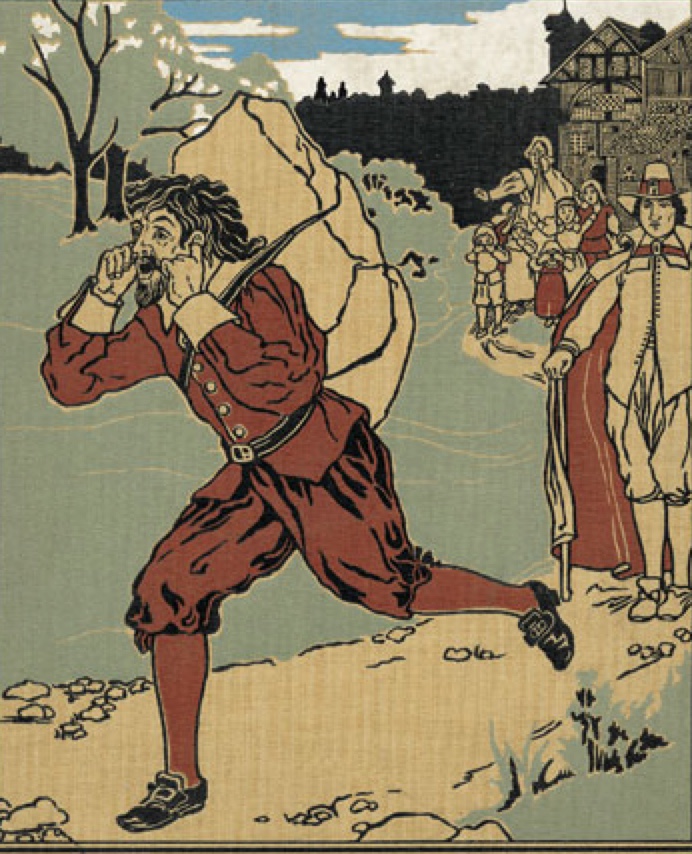
Christians in our culture today must know the answer to this question, there shouldn’t be an equivocation when they are asked this question, the answer of course is Jesus Christ, but our culture demands not a singular response, but a response where all answers to this question are considered valid. If the Christian answers the question in a single truthful response with Christ alone, then the Christian is considered arrogant and hateful. The Rich Young Ruler that we see in Mark is a mirror of our society today. This young man has everything that the world says he should have, but he is still searching for an answer to his deepest desire. Nothing is more important to him that fleshing out this question about eternal life, he runs to Jesus and kneels before him, showing due respect and honor. Jesus is the only one to whom this man can go to for eternal life. Jesus has the answer and this man knows it. John Bunyan places this quest for eternal life squarely in the hands of Christian in Pilgrims Progress; Christian runs away from the unbelieving world shouting “Eternal Life! Eternal Life!”, he plugs his ears not hearing the call of the world for him to come back, but nothing could cause Christian to look back on all the worldly goods he was leaving, his desire for eternal life had become the desire of his soul. The Rich Young Ruler’s desire was also for eternal life but something blocked his attaining it.

The stumbling block for most of us is the things of this world, we look at these things and have no idea that they might one day take over our lives and our worship of God. Quietly they persist in the background, only asking for recognition here and there. These things attract our attention, and like moths to a flame, and dogs to squirrels, we succumb and everything is upside down; nothing makes sense anymore and we can’t wait to get back to the things, instead of loving God, we are now loving things. The Rich Young Ruler had things on his mind that day when he ran up to Jesus. The things in his mind were occupying the same space where God was, but yet these things surpassed God, and the things became god. Jesus surprises the young man, as he usually does and as he does with us, “Why do you call me good? No one is good except God alone.”(v.18) Jesus embraces his deity, and informs everyone that he is the only Good one here. Keeping the Commandments isn’t going to help this young man get his desired outcome, Jesus reasserts that in verse 18. Jesus can see what is blocking this man’s view of God, he knows it is the condition of sin in a corrupted world. Just as Jesus weeps over his beloved friend Lazarus (John 11:35 ), this young man is also loved.

Jesus requires the young man to “…sell all that you have and give to the poor, and you will have treasure in heaven; and come, follow me.”(v.21) This mention of a treasure in heaven doesn’t move the man to relinquish his things, but it acts by placing a tighter hold on those things. It is as if the things know they are going to be replaced and are holding on to their position of worship for the Rich Young Ruler. Nothing seems to shake the cemented position of the man’s things to his worship, he loves things more than he could love God. The things seem to have a great hold on this Rich Young Ruler he sees life without them as not worth living and he is saddened because he cannot have both, God will not allow it, “You cannot serve God and money.” (Luke 16:13c) The point here is not that Jesus is saying that we need to be impoverished, no, but sometimes it’s only when we are in the midst of poverty (physical and spiritual), when we truly rely upon God. Our sufferings and trials in this world help us grow closer to God. When our next meal is uncertain, when we are unaware of where we will be living, then there is recognition of our priorities, and a true understanding of who God is. His love is laser-focused upon this young man and his misplaced worship.

Jesus love and grace comes through loud and clear for the Rich Young Ruler. The man refuses to place his worship in the proper order, and yet Jesus “loved him” this is a great act of love in Mark’s gospel, even in the midst of loving things more than God, Jesus has compassion, Jesus has mercy, Jesus “loved him”. In the middle of our worship of things, Jesus loves us, the Holy Spirit convicts us of this elevation of the world over God. In our sanctification we, unlike the Rich Young Ruler, cannot turn away from Christ, we have been justified, made new through the atoning work of Jesus alone and we are new creations (2 Cor. 5:17) declared to be righteous by God because of Christ alone. Nothing that we have done ever comes within a million miles of changing our hearts. This realization of the Rich Young Ruler causes him severe distress, he sees his chains, and he recognizes his own prison. Like a man who has been sentenced to life in prison, he is acutely aware of his turning down eternity with God.

As a Pastor and Biblical Counselor I see many people who are convicted of their addictions, of their sins and yet fail to give up these things. The addictions started out as something casual with a rationalization that there would be forgiveness. Their tears flood the floor and they speak about leaving the things behind and coming fully to Christ, they swear they will be clean; and yet some go away saddened realizing that their love of things is more than their love of God. But this is not the end for those who think there is no help, those who think the darkness is something that they must get used to. This account from Mark has important considerations for those who are embroiled in addictions, for those whose love of things have eclipsed their love of God, Jesus loves you! In the midst of the pain and in the midst of the suffering, Jesus, the picture of perfect love declares that he loves you. The Cross of Christ is the ultimate picture of love, and that love doesn’t end when you are beset by addiction, or your worship of God is corrupted. If the things of life have left you saddened and you feel helpless, know that the love of Christ awaits you. It’s time to see these things for what they are, worship thieves, and put them in their place before it is too late.

Read this Scripture over again and again and allow God to take you through the account of a desperate young man who needed to divest himself from worldly things so that he could put all of his worship towards the one true God. Let your worship be directed towards the Creator and the Perfecter of our faith, Jesus Christ Almighty.

The Truth and Obstacles to hearing it

Redeemer Presbyterian Church South River NJ

The Truth and Obstacles to hearing it.

kierkegaard quote.jpeg

February 11, 2017

So many times we have gone through life hearing things from different people. We have heard things about how to make your ketchup last longer, how to make beef jerky, how to behave when you are pulled over by a policeman. We take all these things as truth without any hesitation, but when we hear God speak in His Word, there is a disconnect, there is a moment of hesitation where we think this can’t be the truth, there has to be another truth. Another truth? Can this be possible? Logic demands that we see the fallacy of this argument; there cannot be two truths, there can only be one truth. The truth of God has been the truth before this world existed, before the universe came into being, before, well, my brain can’t think of a time before there was time. The truth of God is knowing that He has no end, that God is always and forever will be. We readily accept truth from sources that don’t mean very much, but accepting truth from the most important source, we have an issue with that. Today, maybe we can go through the Truth of God in His Word and see how Jesus asked for the truth, and how the disciples responded.

In Mark 8:27-30 we have an interesting moment that occurs also in Matthew 16:13-17 and in Luke 9:18-20; Jesus asks the disciples for the truth, basically asking them, Who does the world say I am? and Who do you say I am? Jesus knows the answer to the questions because truth rests in him, he is the God man there is no deceit, no sin within him. The truth comes through as Peter resoundingly tells Jesus, “You are the Christ.” (v.29). Peter seems to know the mystery that has been “kept secret for long ages” (Rom. 16:25), but does he really see the truth or just a small tiny piece of truth? Peter certainly cannot see the entire spectrum of who Jesus really is, just as Martha doesn’t really believe that Jesus can bring her brother Lazarus back from the dead (John 11:25-27), they both hear what they want to hear and disregard the rest.1 There is a rejection of the truth here from both of these people, but there is also a realization of a partial truth, a truth that brings them to a place where the real truth can be found, but in the end the truth they are speaking never can bring them to the truth of God. The truth these two speak should bring a reminder to how we hear the truth of the gospel today. Are we hearing the entire truth? Can we see Jesus as he really is? Or do we settle for just knowing a part, a small tiny piece of God’s truth, an aspect of the truth that doesn’t resolve any of our nagging desires for a Savior?

The truth must be seen in the wholeness of it, if we see the truth just partially then we can miss the greatness of it. The gospel truth cannot be separated from Jesus Christ, just as the gospel truth cannot be separated from the crucifixion and the resurrection. The gospel truth can not be just repentance and Godly sorrow for our sins, it must be clothed together with all the richness and finery of all the other essential parts. Peter and Martha knew just pieces of the truth, they would certainly see the truth in full bloom when our Lord rose from the dead, and of course as they sat with the other saints in the Upper Room and experienced the Holy Spirit. But here in context with the Scriptures there is an important lesson here for all of us, do we see the truth in gospel completeness? Or are we just seeing pieces of the truth?

The truth experienced in whole is the truth in Christ and three aspects of that are important for us to look at. The first is, the truth of God against the fiction of the world, or the truth spoken to the world. The second is, the truth of who Jesus is, or the truth spoken about Jesus. The third is, the truth of Christ in us, or the truth we speak to ourselves . The third aspect always hits me right between the eyes, that is because we (ourselves) are the biggest talkers to us, we constantly talk to ourselves hopefully not in public. Paul Tripp2 uses this analogy as he relates how we need to preach the gospel to ourselves everyday. This gospel has to be preached to us in the fullness of what it is intended to be, truth, total and without equal. The truth that we speak against the world’s lies must have the entire gospel in it, without it there is no hope for the unrepentant. The truth we speak about who Jesus is has to be said in relation to a sinless God man, dying on a cross, giving his life for many, without this the truth has no bite, the truth is toothless. The truth we speak to ourselves must be focused on who Christ is in me, how he constantly convicts me of sin and how he has promised eternity to all who believe in him.

The truth comes at us in many different forms. Knowing how to discern the truth requires us to be faithful believers, always going back to God’s Word to see the truth. The revelation of truth in the pages of Scripture is our bedrock, our foundation for the hope of a new life, an eternity with God; a moment here on earth.

  1. Simon and Garfunkel The Boxer 1969 ↩
  2. http://www.paultripp.com ↩

The Coming of the King

Four part sermon series for Redeemer Church

December 4 through December 25

Last week we heard about the Promise of the King and this week we will be looking at the light of the King, I was reminded of a blog post by one of my favorite Christian bloggers Tim Challies. Tim wrote this post back in 2010 about the claims earthly kings pursue. The claims of the earthly kings cannot compare to the righteous sinless King, Jesus Christ.

Christmas for Christians demands that we see the birth, life, death and resurrection of Jesus as an unbelievable gift to a world drowning in sin.

Tim Challies captures what we should be seeing as we await our Savior coming to rescue a world in full rebellion. I have copied it for you all to see below.

Merry Christmas!!

He Has No Claim

December 7, 2010

Studying European history can be both fascinating and frustrating. Understanding the intricacies of all of those nations, borders and rulers could very easily be a life-long pursuit. The history of the continent is filled with claims, and counterclaims as one person after another sought to prove himself the legitimate heir to one of its many kingdoms. There were many who sought to claim thrones and these claims had to be settled through lengthy and detailed examination. Generations, kingdoms, marriages, and thrones had to be examined to understand who had the rightful claim to a throne.

I once found a similar concept of “claiming” in the Bible and it struck me as one of the most terrifying passages of Scripture. I remember as a child finding Revelation a dark and scary book. Visions of beasts and persecution, wrath and disaster played out in my mind as I tried to sleep. But I don’t think that’s any scarier than the implications of what I found in a particular verse.

It comes as Jesus is preparing to leave his disciples for the last time. They are in the upper room together celebrating the last Passover and the first Lord’s Supper. Jesus is giving his disciples their final instructions, telling them that all he has taught them is about to be fulfilled. He is gentle with them, knowing that they are blinded to the reality of what is about to happen. He is kind to promise that he will send His Spirit to indwell and guide and teach them. And then he tells them that it is time for him to leave.

“I will no longer talk much with you, for the ruler of this world is coming. He has no claim on me…” Jesus knew that Satan was about to unleash his full fury upon him. And far, far worse, he knew that Satan’s wrath was as nothing compared to the wrath of God that he would soon have to face. Satan, the ruler of this world, was coming. He was going to drag Jesus, like a helpless, hopeless lamb, through the streets, through the courts, and to the cross where he would be tortured and nailed and pierced in utter agony. Satan was going to do his worst. But Satan would not accomplish what he had hoped. In fact, he would accomplish the very opposite of what he had intended. By inciting the masses to drag Jesus to that tree, Satan would make sure his own doom and ensure the salvation of multitudes of God’s people. Satan could do nothing to Jesus beyond the physical, for he had no claim on him. He had no claim on the Son of God.

The Bible calls Satan the accuser because that is exactly how he does his work. In Revelation 12 we read of a voice that cries out, “Now the salvation and the power and the kingdom of our God and the authority of his Christ have come, for the accuser of our brothers has been thrown down, who accuses them day and night before our God.” Satan delights in accusing God’s children of sin. Before the throne of God he tells of our sin and our failure. He tells of his reign in the hearts of all who have sinned. He tells of his rightful claim to the souls of all who have sinned against the Creator.

But he had no claim on Jesus. Satan could not whisper in Jesus’ ear that he was unloving or unworthy or sinful. He could not remind Jesus of sins he had committed, people he had shunned or offenses against God. He could not remind Jesus of impure motives or impure thoughts. Satan was powerless to accuse Jesus. He had no claim against him. In John 8:46 Jesus asked the Pharisees a rhetorical question after they accused him of being in league with Satan. “Which one of you convicts me of sin?,” he asked them. And none of them could answer. They were silent. Satan is likewise unable to convict Jesus of sin. He has no claim. He must stand in silence before the perfection of Jesus.

But not so with us. Satan has a legitimate claim to my soul and yours. Satan can recount endless lists of offenses against God. You and I have committed grevious offenses against God. We have done so joyfully, willingly, deliberately. We have done so as a show of our rebellion against God. We have enjoyed being sinful. We have enjoyed giving Satan a claim on our souls. In a time of judgment there is no doubt that Satan can produce a list of offenses more than sufficient to prove his claim on us. It is a legitimate claim. He has ruled us and we have allowed ourselves to be ruled by him.

Terror should fill the hearts of all who ponder Satan’s claims on their souls. And how could it not? Satan, the accuser, the evil one, wants my soul as his own possession. He has a claim on it. He has a claim on you. How can you not fear as you read those words?

But I thank God that there is more. When Satan flung Jesus upon that cross, he was unwittingly bringing about his own destruction. When Jesus’ time on the cross was complete, he cried out, “It is finished!” It was a cry of triumph–a cry whose fullest meaning we can never know. It was a cry that pierced history–it divided the history of humanity. It was the greatest, purest, most meaningful utterance the world can know. In his death Christ took our sin upon himself. He took the upon himself. He took the accusations of Satan and bore them on our behalf. As God turned his back on Jesus, while at the same time pouring out his wrath upon him, Jesus atoned for our sins. He entered a claim of his own in the lives of his children. My sin became his and his righteousness became mine.

The accuser lost his claim. When Satan accuses me I am now able to know, to believe, to trust and to affirm that his claim is null and void. I am clothed in Christ’s righteousness. My sin has been removed. My guilt has been taken away. I have been redeemed. And, as the triumphant climber leaves a flag at the peak of a mountain, Jesus Christ has sent his Spirit to live within me and to mark me as his own possession.

Satan may still accuse me. He may still seek to convince me that I am his. But he has lost his claim. Jesus has washed me with his blood. He has set his Spirit within me. Jesus Christ has claimed me as his own. Satan has no claim on me. And that is a glorious, wonderful thing.


Tim Challies is an author, blogger and Christian book reviewer his web site is Challies.com

Looking For The Light

Looking For The Light

threecrossatsunrise


This past Sunday at Redeemer in South River New Jersey we looked at Mark chapter four verses twenty-one through twenty-five. The parable that Jesus speaks to his followers and those gathered along the Sea of Galilee is the “parable of the lamp”,

“ And he said to them, “Is a lamp brought in to be put under a basket, or under a bed, and not on a stand?  For nothing is hidden except to be made manifest; nor is anything secret except to come to light.”

What is this light that Christ tells us about? How is this light brought into our daily lives and how is this light to be used by followers of Jesus? These three ideas will be the focus of the post today.

What is the light? The light that Jesus is referring to is really two different things. For those who are hearing the parable and not allowing the deeper truth of God to rest in their hearts, the light Jesus speaks of is the light coming from the small terra cotta lamps that were filled with usually olive oil or some other oil that was flammable, these small lamps gave light to the dark nights in Israel and most of the world at this time. These lamps were the only source of light when the Sun went down, they allowed people to do things during times of darkness and they were mobile, you could take them from place to place.

Secondly, if your heart was open and being led by The Holy Spirit, then these words of Christ were going deeper then just a physical rendering of light; then you saw the light as something much different then your friends saw, you saw this light reflecting the truth, the truth of God coming from The Son of God. This light was not going to be contained in some man made vessel. This light could never be constrained inside boundaries made by man. This light was eternally present, before creation in eternity past, and now this light bridges the gap between the Scriptures of the Old Testament which promise the Messiah throughout it’s inspired pages, and the new covenant which shows the promise in Christ Jesus.

The light this person sees is not breakable like the lamp. This light is unbreakable and cannot be broken by anything this world does. The light that Jesus reveals to us in this parable is a light that destroys darkness, it doesn’t just light it up for a while like our terra cotta lamp, but it utterly and completely destroys darkness wherever this light goes.

So we are pushed into a new focus here, the light goes forth destroying darkness as it goes.

Our second focus question today is about the method of this light and how it is used by us the followers of Jesus Christ. We are helpless in our own attempts to gather this light and therein lies the rub, the more we work for the light, the further the light gets away from us. This light of Christ, his holiness, his underserved love, makes it’s way to us because of nothing that we do, but only through the amazing love of God, and that should make us see the light for what it is; a gift that has been given to us freely without any deserving work, simply because in God’s mysterious awesome love, he chose to give it to us.

Now, don’t get bogged down in the weeds, see the big picture, just look at how much God loves you, so much so that he gave you the gift of salvation. Hope is yours because of the awesome love of God through Jesus Christ; our future is secured because of this tremendous gift of light.

The gift desires to be used, the gift of this wonderful light cannot be sitting on the shelf like the emergency flashlight in your closet. We all know how reliable that flashlight is, when we go for it, the light is dim and the batteries have rusted. No, this light must be used by the followers of Christ, it is meant to be used, if it is not used it is not the light that you think it is, it is an imposter light. The real light of Christ moves us to use it, to send the light forth regardless of the pressures, the time or the finances. This light runs on faith, “The righteous live by faith” (Romans 1:17)

Faith brings us to our third focus question today, how do the followers of Christ use this light of Christ? Since this light of the Holy Spirit dwells within us because we have been reborn as true believers of Jesus, the light we have is not our own; it is The Holy Spirit that moves the light within us. The use of the light therefore is not something that we move in our own power, we are constantly relying upon Christ to use us to bring the light to places where God chooses. Since we are totally reliant upon God to use the light within us we have to be in constant contact with him. There will be times that God wills to send the light in us to places where we would never choose if we were in control of the light, good thing we are not 🙂 So, humility and repentance figure into using this beautiful light of Jesus Christ. Humility, because we have to have an attitude of knowing that we are sinners saved by grace. We have to see others as people in desperate need of a Savior, we have to see ourselves as once lost but now found. We have to see others as Jesus does.

Repentance because we are still in the grip of our sinful fleshly bodies, every day experiencing thoughts of sin, our repentance requires us to go before God and ask for forgiveness. This repentance is the constant contact with our Creator we spoke of before. These twin light movers, humility and repentance allow us to be the people God wants us to be, people that are able to receive the light of Christ and people that are equipped to pass on the light of Christ.

So we have seen three answers to some focus questions about the Light of The Son of God. How you use the light of Christ in your life rests on seeing the light as not your own, the light is Christ in you working in all the everyday things we do in life. Wherever you go the light of Christ goes with you and the glory of God shines.

Together in the Gospel of Mark

Going through Mark’s Gospel at Redeemer 2016

Yes, we are going through the entire gospel of Mark here at Redeemer. We started the gospel in May and as of this writing we are in Chapter Three, preparing the Lord’s Day message on the fourteenth of August. Being a Pastor of a church means being responsible for many things chief among them is having the great privilege of preaching the Word, “in season and out of season…” ( 2 Timothy 4:2). It is a glorious pleasure to be able to stay in one gospel looking at the original meaning and what God is saying through His Word to us today.

Every week I am sitting with the sermon for next week, and truthfully I am thoroughly amazed at how God is speaking through the pages of Mark’s gospel. Jesus is plainly seen walking on the road to the Cross in this fast paced narrative. Everything that the Lord does in this gospel is reflected from the “Big Picture View” of the sacrificial act of crucifixion which is sufficient for the entire world to be saved. This aspect is crystal clear from the first verse of Mark, “The beginning of the gospel of Jesus Christ, the Son of God.” to every verse in this inspired account of the life of our Lord. Our theme as we go through Mark’s account is then appropriately titled “Jesus Christ The Son of God”.

This is a quick study of Jesus, Mark gives us a different look into the life of Christ. Mark along with the gospel of John, doesn’t give us a study into Jesus’ birth, but we start out with a strong statement that cannot be denied in verse one that Jesus is, The Son of God.

Many people will deny that Jesus is God, many religions deny that Jesus was God, but Mark tackles that issue head on with this undeniable statement. In the first century this would have been very controversial to say the least, the Romans worshipped Caesar as God and the Romans were in charge.

This is the atmosphere that Mark wrote his Holy Spirit inspired narrative. The actual date of the writing of Mark is not known, scholars have used other means to identify the period in which it was written, so there is a span of about five or six years for the writing. James Edwards in his excellent commentary on Mark writes:

In summary, although none of the foregoing arguments and evidence is conclusive in itself, a combination of external and internal data appears to point to a composition of the Gospel of Mark in Rome between the great fire in 64 and the siege and destruction of Jerusalem by Titus in 70, that is, about the year 65.161

So here we are in the beginning of the gospel of Mark going through the pages of the Bible together as a church. Every week on the Lord’s day we have the opportunity to hear the Word of God preached in Portuguese or English, but every sermon is geared towards our theme for Redeemer Church (Redentor Igreja) this year that God has given to believers, gifts of the the Spirit. Through Christ, God has given to us certain gifts to share and build up other believers. The gifts of the Spirit can be seen in all the pages of Scripture and now we can see them as we go through Mark. Let us see our Redeemer Christ Jesus revealed each week and let us hold on to that gift as we begin our week, strong and anchored in the grace, love and mercy of Jesus.

  1. Edwards, James R. The Gospel according to Mark. The Pillar New Testament Commentary. Grand Rapids, MI; Leicester, England: Eerdmans; Apollos, 2002 .9. ↩